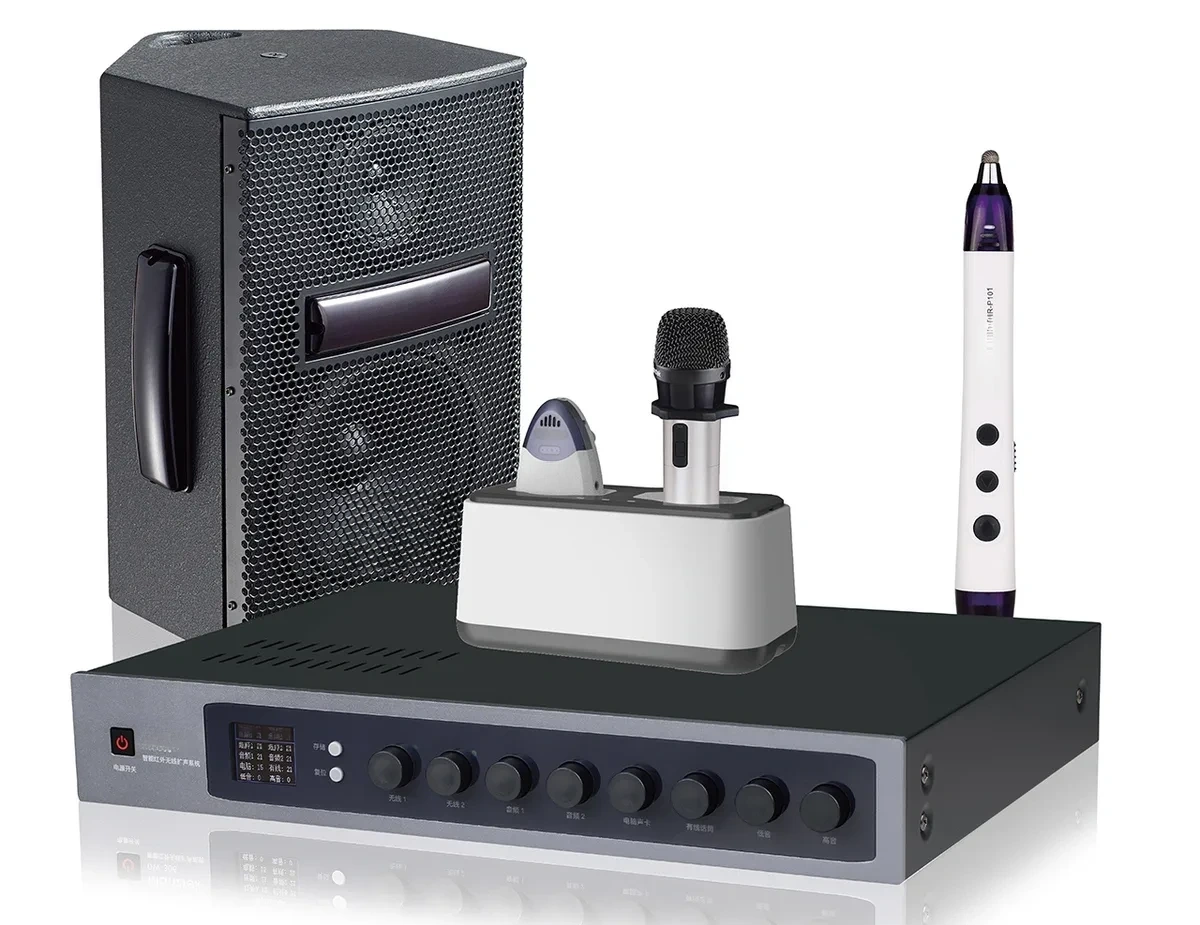
How to Choose a Classroom Soundfield System: A 2026 Buyer’s Guide

A classroom soundfield system is one of the few AV purchases that changes teaching conditions every single day. When a teacher can speak at a comfortable level and every student hears the same clear signal, fewer instructions need repeating, less voice strain accumulates by Friday, and students with mild hearing difficulties stop being quietly left behind.
But the category is also easy to over-buy or under-specify. A 30 W all-in-one unit and a 2 × 60 W amplifier with four ceiling speakers can both be described as “classroom sound reinforcement”; one may be perfect for a 60 m² room and the other entirely mismatched. This guide walks through the decisions that actually determine whether a system works in a real classroom.
Start with the room, not the wattage
Before comparing models, record four numbers for each room: floor area, ceiling height, surface materials (hard or soft), and the distance from the teacher position to the furthest seat. Those four facts decide speaker power, speaker count, and whether an expansion infrared sensor is needed.
- Up to about 60 m² — a compact all-in-one soundfield unit with two column speakers is usually sufficient.
- 60–100 m² — look for 25–40 W output and a wide-angle IR sensor array; check that the sensor can see the whole teaching zone.
- 100 m² or deep rooms — plan for an expansion sensor or a distributed speaker layout rather than simply turning up the volume.
- High ceilings or glass walls — expect more reflections; speaker placement and modest equalisation matter more than extra power.
Decode the signal chain
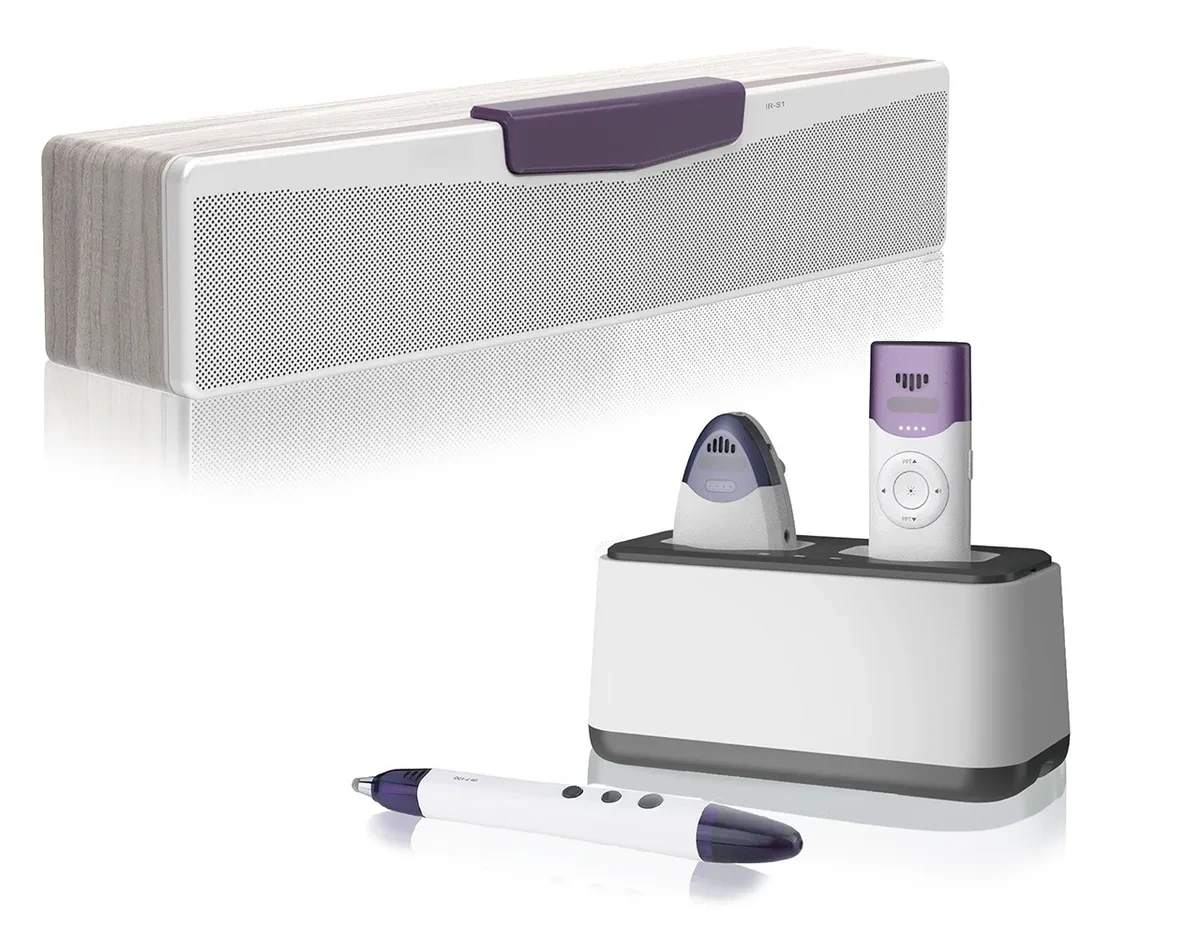
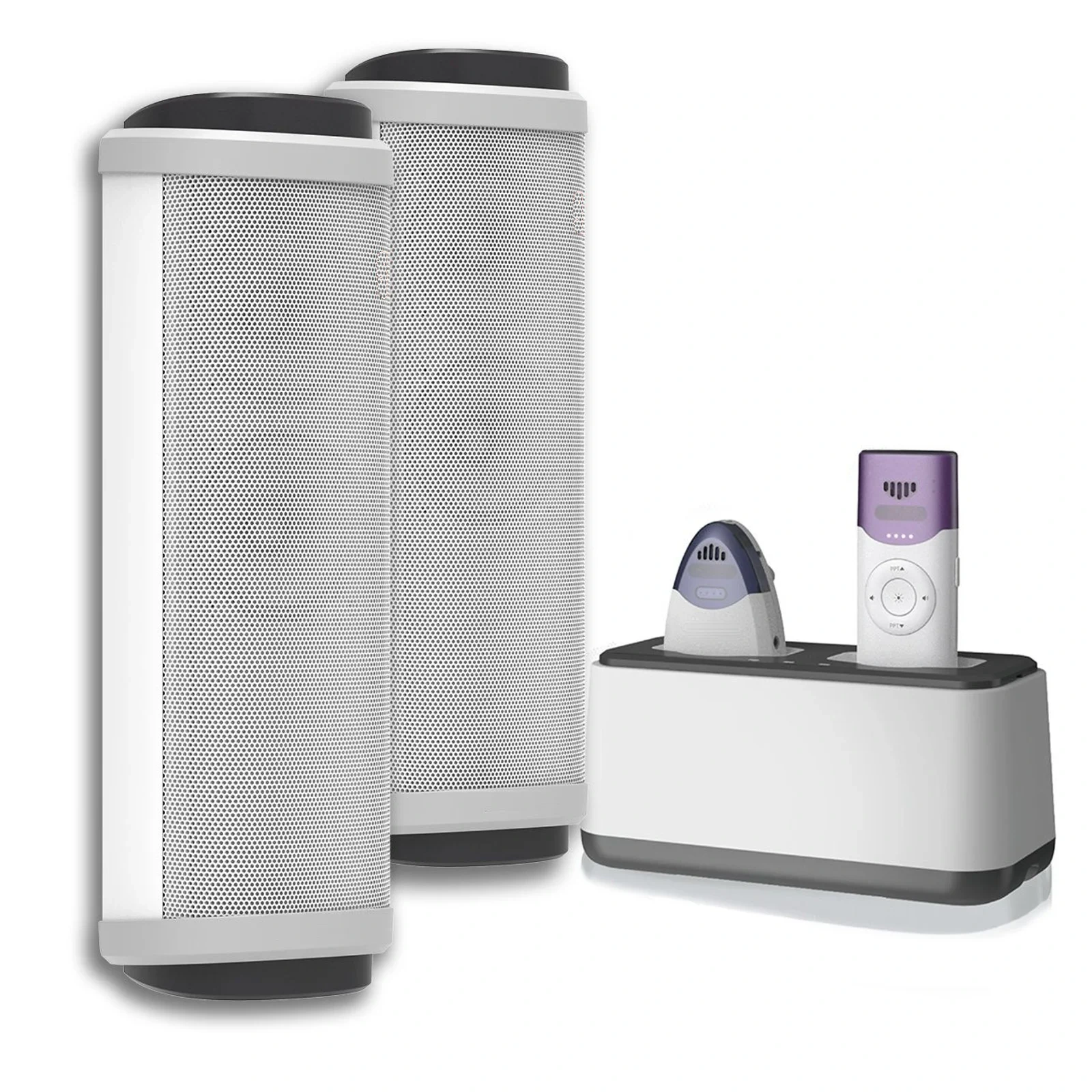
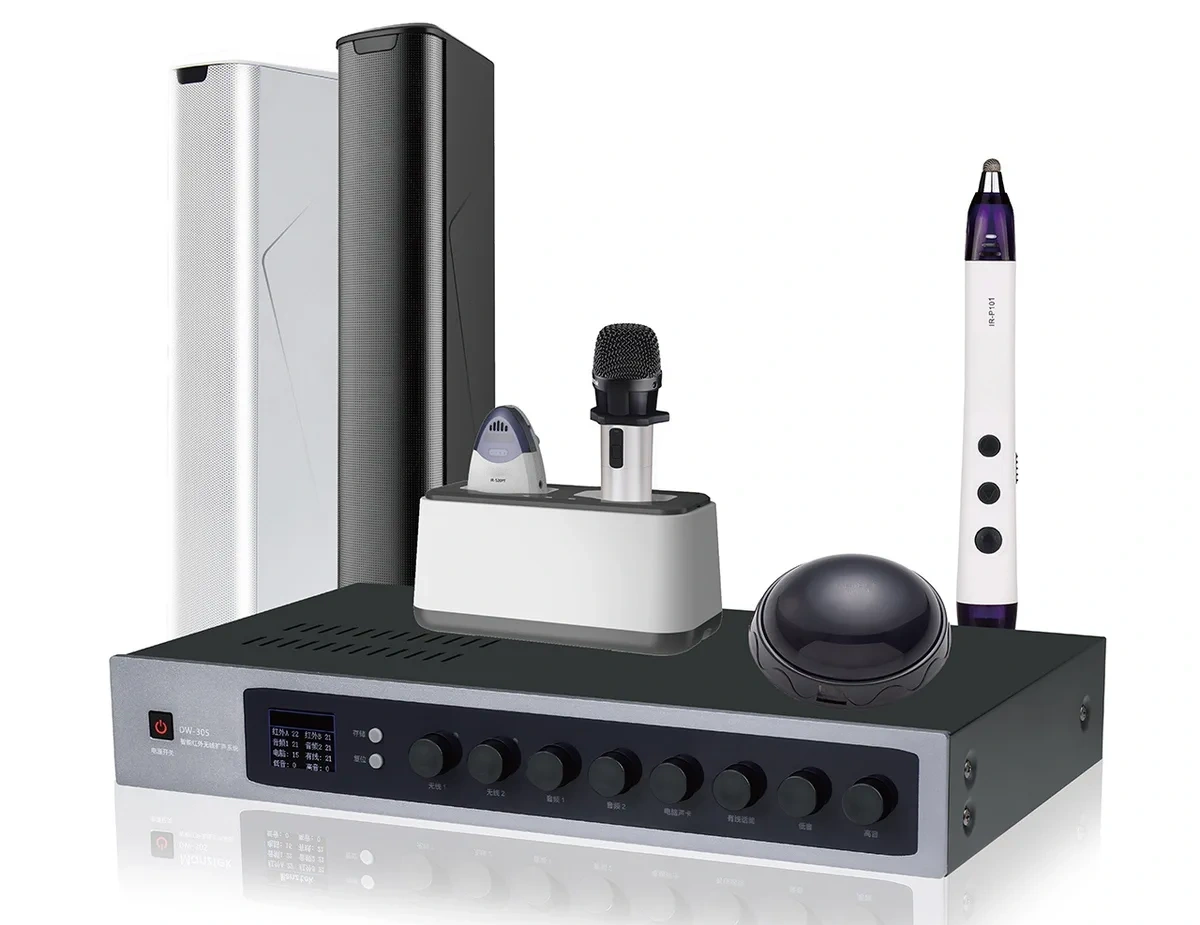
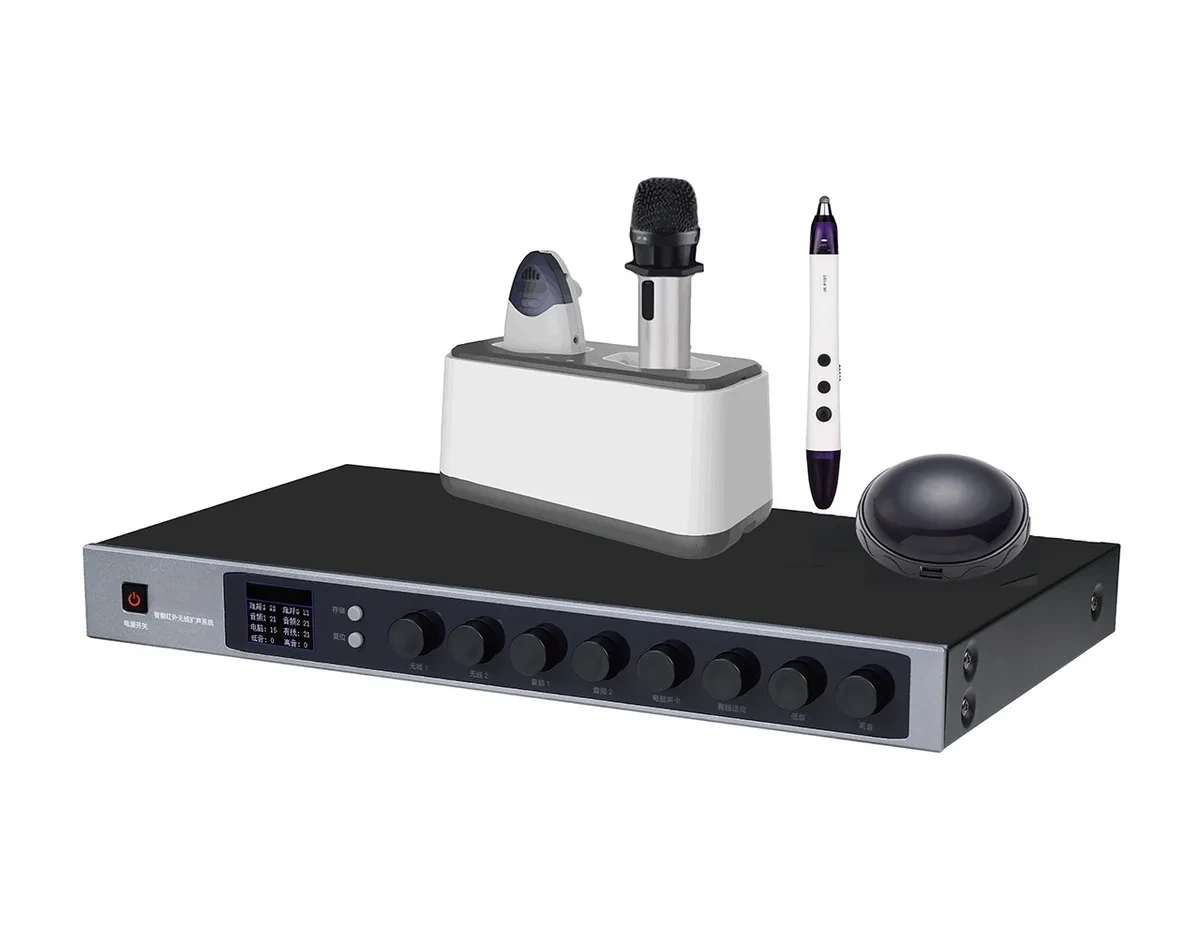
Every wireless classroom system has the same four stages, whether it is sold as one box or five:
- Microphone — picks up the teacher. Pendant and lapel formats keep hands free; handheld formats suit PE, assembly and training rooms.
- Receiver — receives the wireless signal and converts it back to audio. In an all-in-one system it is built into the main unit.
- Amplifier — raises line level to speaker level. Class D designs are now standard because they run cool and fit small enclosures.
- Speakers — convert electrical power into sound. Two column speakers placed left and right of the teaching wall usually give more even coverage than one larger speaker.
Ask suppliers to describe each stage separately. A spec sheet that lists only “power: 30 W” without receiver sensitivity, microphone battery life or speaker coverage is not enough to evaluate a system.
Infrared or RF?
Classroom microphones mostly use either infrared (IR) light or radio frequency (RF) transmission. IR does not pass through walls, which is a feature in schools: neighbouring classrooms cannot pick up each other’s audio and there is no frequency coordination to manage. RF travels through walls and can cover larger distances, but needs channel planning and may be subject to local radio regulations.
For a standard indoor classroom, IR is usually the simpler choice. For outdoor fields, very large halls, or rooms where the microphone must work across multiple spaces, RF or a hybrid approach may fit better. Our infrared vs RF comparison covers the trade-offs in detail.
What the numbers on a spec sheet mean
| Specification | What it tells you | What to check |
|---|---|---|
| Rated power | Amplifier output | Continuous (RMS) rather than peak; 25–40 W is typical for a classroom |
| Frequency response | Range of reproduced sound | Speech clarity depends more on 200 Hz–8 kHz flatness than on extreme highs or lows |
| THD | Distortion at rated output | Below 1% is acceptable; below 0.1% is excellent |
| Working area | Rated IR coverage | Confirm whether coverage is circular or limited by sensor angle |
| Battery life | Microphone runtime | Look for 8 hours or more, plus a charging cradle for overnight recharge |
| Channels | Simultaneous microphones | Two microphone channels plus one presenter remote covers team teaching |
Hybrid teaching and AV integration
If lessons are recorded or streamed, the soundfield system needs a clean audio feed to the classroom PC. A built-in USB digital sound card turns the system into a plug-and-play audio interface; without one, you need an external mixer or capture device. Also confirm the input options for a wired microphone, an auxiliary audio source, and a line output to an assistive-listening system.
For campus-wide installations, RS-232 or network control lets the system power on with the room controller. A 48 V phantom-powered microphone input is useful for guest lecturers and panel sessions.
A practical procurement checklist
- Survey each room type once; do not specify all rooms from one template.
- Require a system wiring diagram with sensor and speaker positions.
- Request a live demonstration in a comparable room, not a quiet showroom.
- Confirm microphone battery strategy: spare batteries or a charging dock per room.
- Check compliance documents for the destination market before ordering.
- Agree on warranty terms and spare-parts availability in the contract.
Seekika Audio supplies infrared classroom soundfield systems, microphones and accessories for schools, distributors and OEM programmes. If you share a room schedule and floor plan, our team can map coverage and recommend a configuration for each space.
FAQ
How much power does a classroom soundfield system need?
For a typical 50–70 m² classroom, 25–40 W of continuous amplifier power with two well-placed speakers is usually enough. Larger or unusually absorbent rooms may need more power or additional speakers. Power alone is not a reliable indicator — speaker sensitivity and placement matter just as much.
Can one system serve two classrooms?
Not in practice. Infrared audio does not pass through walls, so each classroom needs its own receiver or all-in-one unit. Microphones can be shared between rooms if they are recharged and re-paired, but simultaneous use in adjacent rooms requires separate systems.
Do teachers need training to use it?
A well-chosen system should need almost none: switch on, pick up the microphone, speak. Teams often benefit from a short briefing on mute buttons, charging routines and where not to stand relative to the speakers, but daily operation should be one or two actions.
What should be included in a classroom audio warranty?
At minimum: the main unit, microphones, charging dock and power supply. Confirm the warranty period, whether shipping costs are shared, and how long spare microphones and batteries remain available. These terms should be written into the purchase contract rather than assumed.