Infrared vs RF Classroom Audio: Which Wireless Microphone Technology Fits Your School?

Every classroom microphone transmits audio through either infrared light or radio waves. The two technologies solve the same problem — getting a teacher’s voice to the back of the room — but they behave very differently once walls, sunlight and neighbouring classrooms enter the picture.
This guide explains how each technology works, where it excels, and which questions to ask before selecting a system for a school or training centre.
How infrared classroom audio works
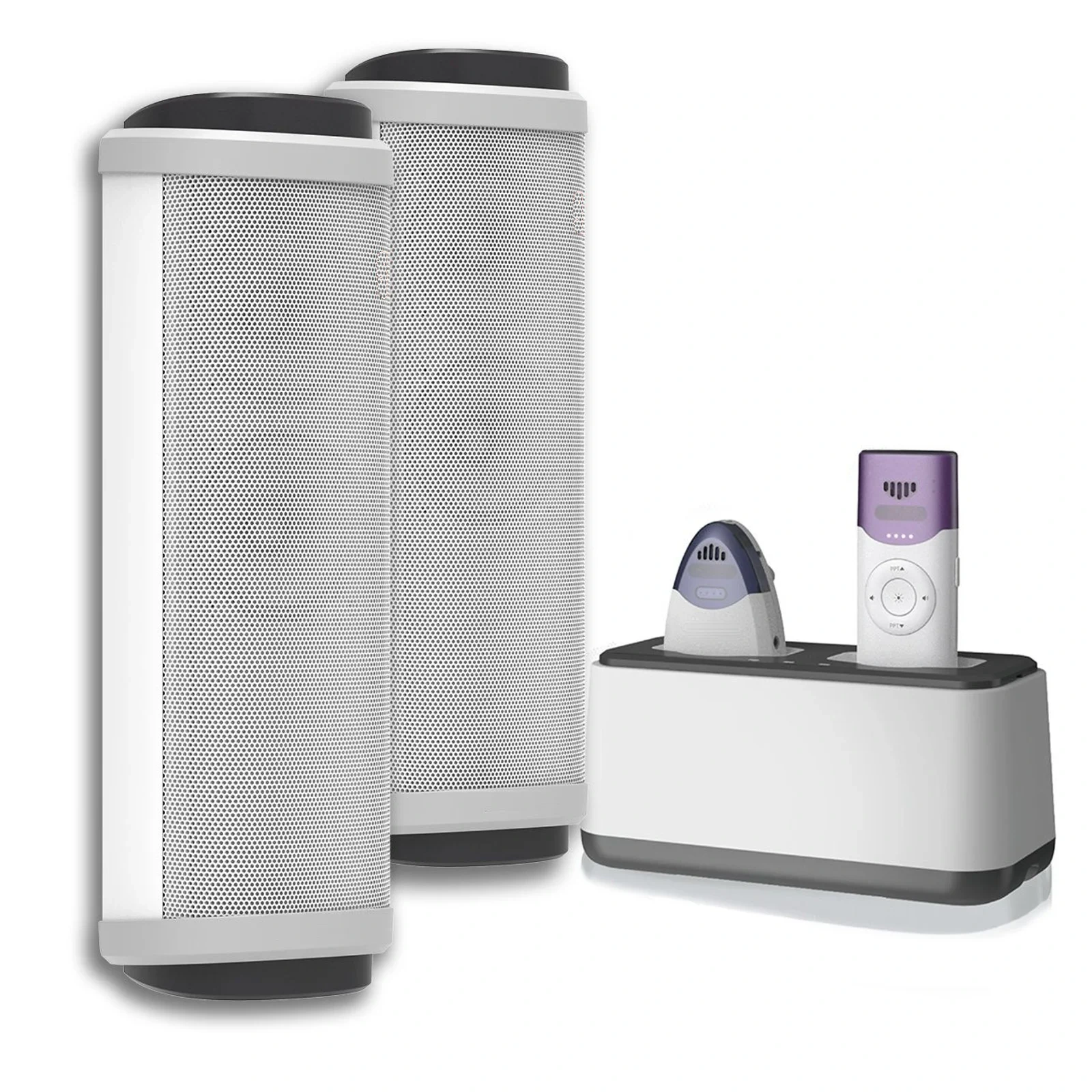
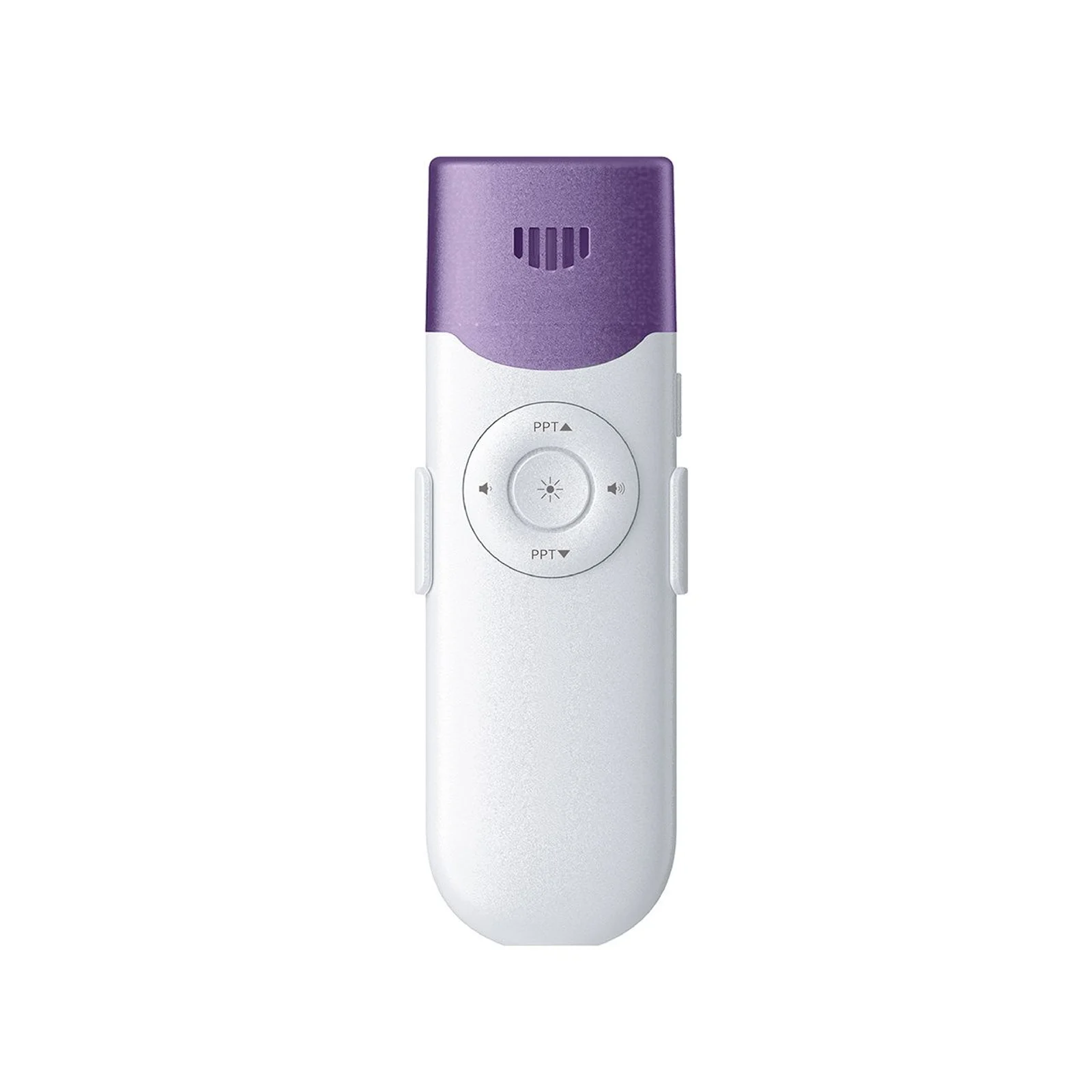
An infrared microphone converts sound into an electrical signal, modulates it onto an infrared carrier (commonly around 850 nm), and emits it through LEDs. A receiver or sensor in the room detects the light and demodulates the audio. Because the carrier is light rather than radio, the signal behaves like a torch beam: it needs line of sight and stops at walls.
Most classroom systems use a wide-angle sensor array mounted on the main unit or ceiling so the teacher can move around the front of the room without aiming the microphone. Some systems add a second sensor for long or L-shaped rooms.
How RF classroom audio works
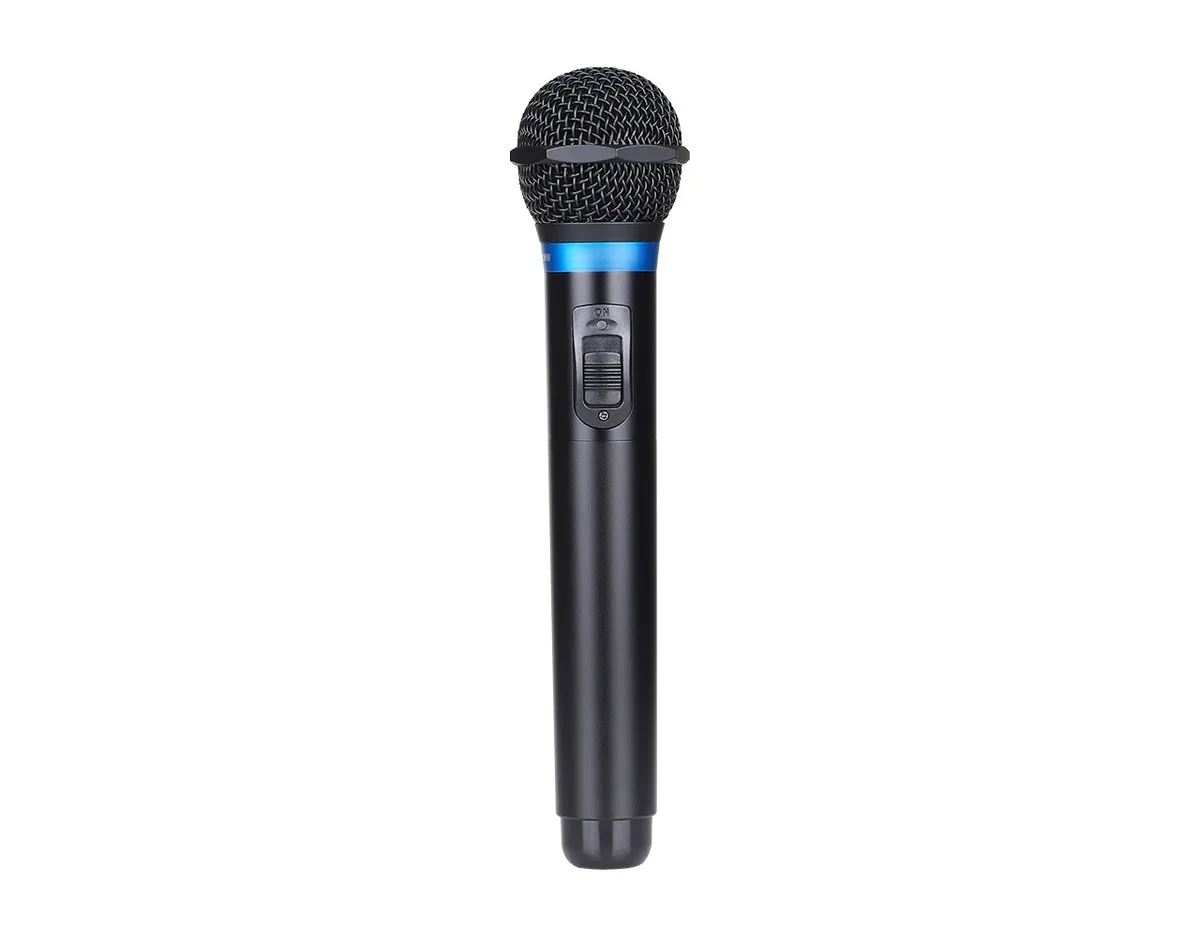
Radio-frequency systems transmit through the air on a licensed or licence-free band. Depending on the region and product, they may use VHF, UHF, 2.4 GHz or DECT. RF passes through walls and people, which extends range and removes the need for line of sight — but it also means signals can leak into adjacent rooms and must be coordinated with other wireless systems.
Side-by-side comparison
| Consideration | Infrared (IR) | Radio frequency (RF) |
|---|---|---|
| Walls | Does not pass through — rooms stay isolated | Passes through — can spill into neighbouring rooms |
| Line of sight | Required between microphone and sensor | Not required |
| Sunlight | Direct sunlight can interfere with reception | Generally unaffected |
| Frequency planning | None between rooms | Channel coordination recommended or required |
| Privacy | Audio stays inside the room | Signal may be receivable nearby |
| Outdoor use | Poor in daylight | Works well |
| Typical classroom fit | Excellent | Good, with planning |
Where infrared wins
Dense classroom buildings. In a school with 30 rooms along one corridor, IR means 30 independent systems with no channel map. Installers do not need to revisit the site when a room is added, and teachers never discover that their microphone is coming out of the room next door.
Privacy-sensitive settings. Because IR does not leave the room, it suits counselling rooms, meeting spaces and exams where audio should not be captured elsewhere.
Simple daily operation. There is no pairing, no channel selection and no interference from Wi-Fi access points. For a teacher who uses the system between lessons, that simplicity is the feature.
Where RF wins
Outdoor and semi-outdoor spaces. Sports fields, courtyards and covered assembly areas receive too much sunlight for reliable IR. RF is the practical choice.
Very large or obstructed halls. If the microphone must work from any point in a hall with columns, stage wings or balconies, RF avoids the line-of-sight problem.
Multi-room roaming. A presenter who walks between adjoining spaces cannot carry an IR link through the doorway unless each room has its own sensor; RF can cover the route on one receiver.
Hybrid and installed systems
Some schools combine both: IR in general classrooms and RF in the gym, theatre and outdoor areas. The two systems can share charging infrastructure and microphones if the manufacturer supports dual-mode hardware, but do not assume compatibility between brands.
For installed systems, check how the receiver connects to the room’s amplifier and control system. A receiver with balanced outputs, RS-232 and a USB audio interface integrates more cleanly than a consumer-style box with a single 3.5 mm jack.
Questions to ask before choosing
- Will the microphone be used in direct sunlight at any point in the day?
- Are adjacent rooms likely to use the same system at the same time?
- Does the room have columns, deep alcoves or a raised platform that could block a sensor?
- Is the audio ever required outside the room — for example, in a corridor or hall?
- Which radio regulations apply in the destination country?
For most indoor K–12 classrooms, infrared remains the lower-risk default: it is private, needs no frequency planning, and keeps neighbouring lessons separate. RF earns its place where walls, sunlight or distance make light-based transmission impractical.
Seekika Audio supplies both infrared classroom systems and wired alternatives for fixed installations. Share your room types and usage patterns and we will recommend the transmission technology that fits the project.
FAQ
Does infrared audio work in a room with large windows?
Yes, as long as direct sunlight does not fall on the microphone or sensor. Diffused daylight is generally fine. Where strong afternoon sun crosses the teaching area, position the sensor away from the window or consider an RF system instead.
Can an infrared microphone be used in two classrooms?
Only if each classroom has its own receiver or sensor and the microphone is re-associated when moving between rooms. In practice, most schools issue one microphone per room because the systems are not designed for seamless roaming.
Is infrared safe for teachers and students?
Classroom infrared systems use low-power LEDs in the near-infrared range, similar to a TV remote. They emit no ionising radiation and are widely used in schools. Compliance documentation for the destination market should still be requested from the supplier.
Which technology is better for hybrid teaching?
Both can work. The more important question is how the system feeds audio to the classroom PC or video platform: look for a built-in USB sound card or a clean line output, plus a microphone that rejects room noise. Infrared keeps the local pickup isolated; RF may be easier in rooms with obstructions.