Speech Intelligibility in Classrooms: STI, SNR and What They Mean for Audio Design

Classroom acoustics are usually discussed in terms of noise — the road outside, the corridor, the extractor fan. But intelligibility depends on three things at once: how loud the speech is above the noise, how much the room smears the speech over time, and how much of the speech arrives at the listener without being masked.
The metrics that describe these effects are well established, and understanding them makes specification conversations much shorter. This article explains the three that matter most.
Signal-to-noise ratio
Signal-to-noise ratio (SNR) compares the level of the speaker’s voice to the background noise at the listener’s position. It is the simplest and most immediately useful metric in a classroom.
For children, and especially for children listening in a non-native language or with hearing loss, research supports a target of roughly +15 dB at the back of the room. Many classrooms achieve +5 to +10 dB unassisted, which is why back-row students struggle even when the teacher feels they are speaking loudly.
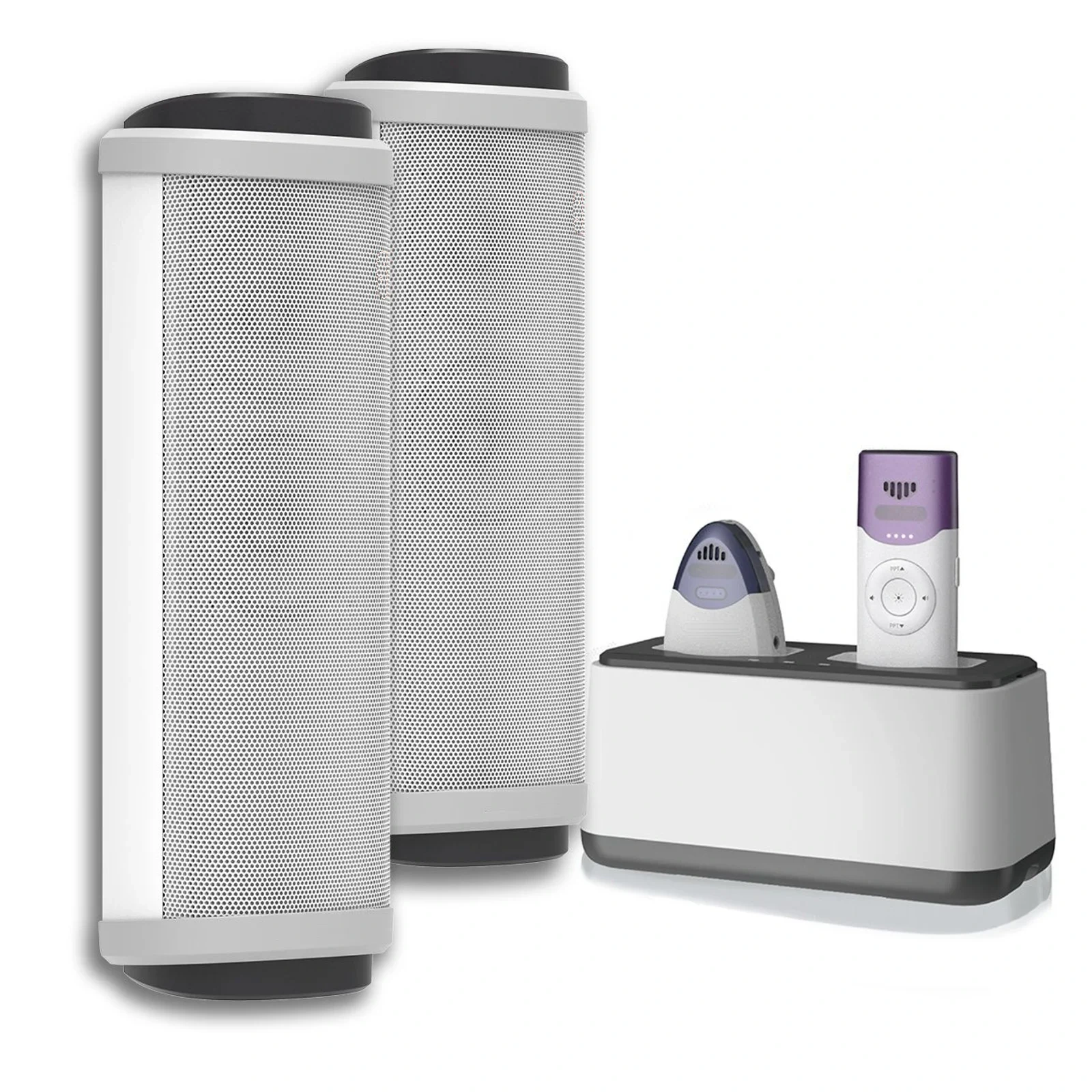
A soundfield system raises SNR directly: the microphone stays close to the teacher’s mouth, so the reproduced speech at the back row is louder relative to the room noise, regardless of where the teacher stands.
Reverberation time
Reverberation time (RT60) is how long sound takes to decay by 60 dB after the source stops. In a room with a long RT60, successive syllables overlap and speech becomes smeared — the effect listeners describe as “boomy” or “echoey”.
For classrooms, targets of around 0.4–0.6 seconds in furnished rooms are commonly cited, with shorter values for rooms used by students with hearing impairment. Hard floors, glass walls, high ceilings and sparse furniture all push RT60 up.
Amplification cannot fix reverberation. Turning the system up in a reverberant room raises the direct sound and the reverberant sound together, and often triggers feedback first. Acoustic treatment — absorptive panels, soft furnishings, curtains — is the correct remedy, and it is worth doing before or alongside audio work in difficult rooms.
Speech transmission index
The speech transmission index (STI) combines noise and reverberation into a single number between 0 and 1 that predicts intelligibility. It is measured with a specialised signal and a meter, and it accounts for the modulation of speech rather than just its level.
For classrooms, an STI above roughly 0.6 is generally considered acceptable and above 0.75 good. The value of STI is that it captures problems SNR alone misses: a room can have a healthy SNR and still score poorly because reflections arrive late enough to mask consonants.
Where soundfield fits
A soundfield system improves SNR substantially and can improve STI in rooms where noise is the limiting factor. In rooms where reverberation dominates, the improvement is smaller and treatment becomes the priority.
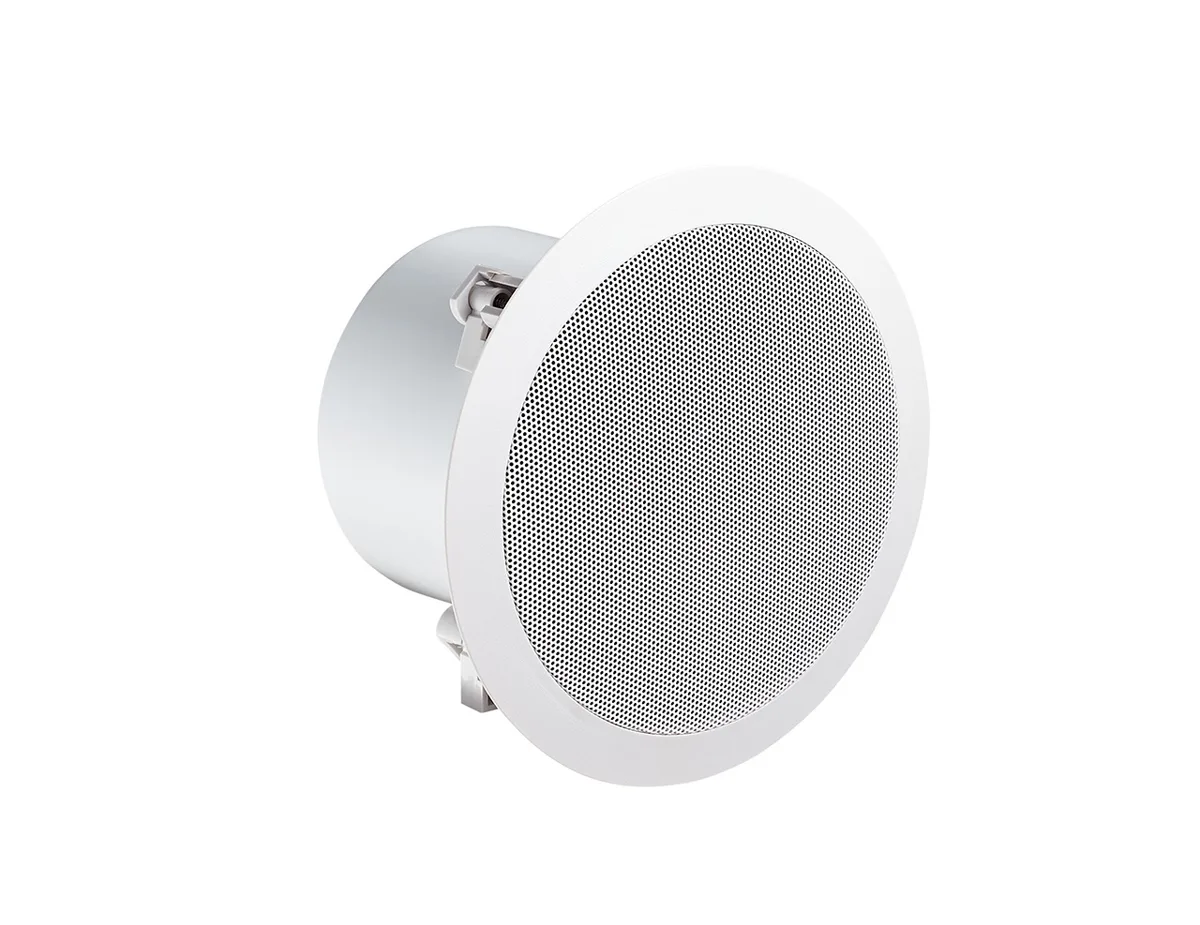
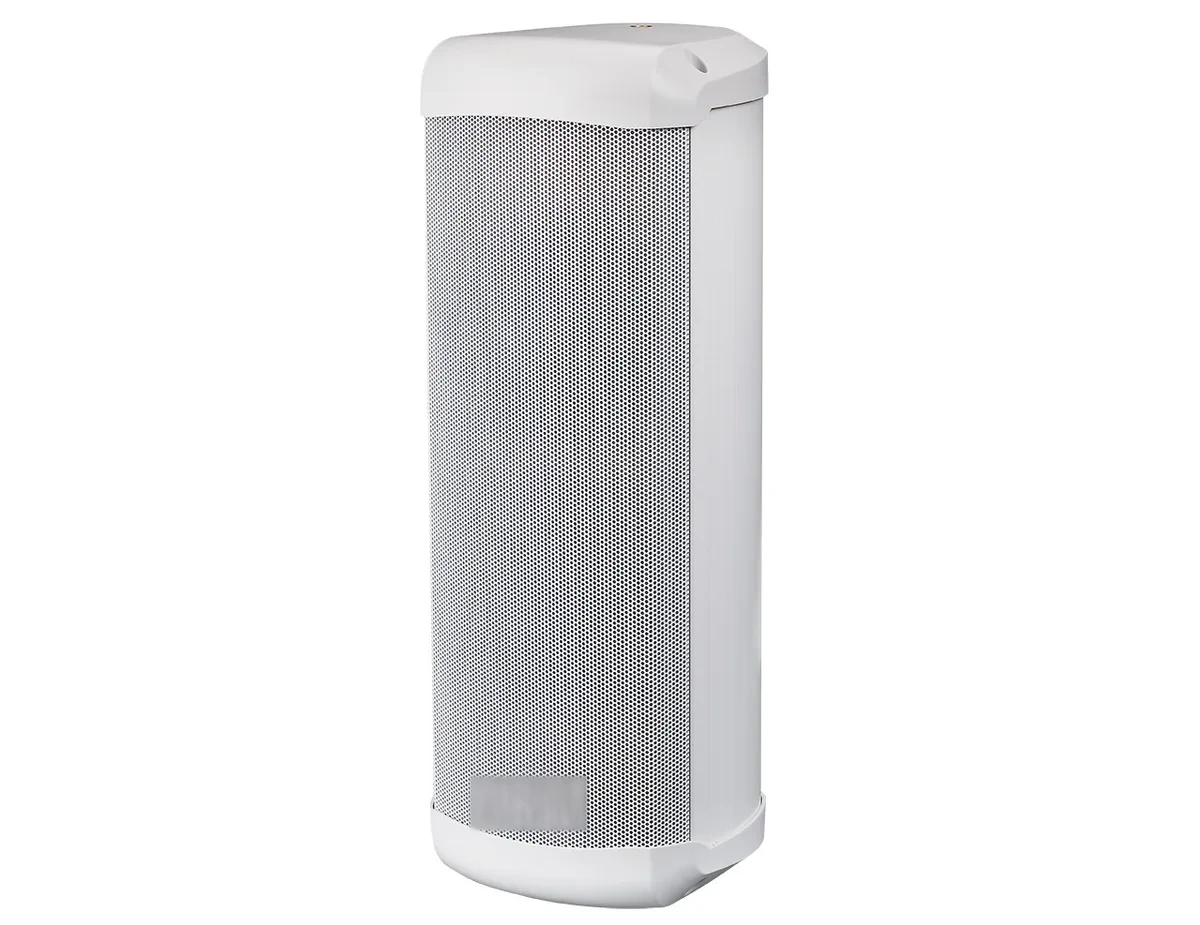
Speaker placement matters here. Speakers forward of the teaching position and aimed at the listeners increase the ratio of direct to reverberant sound at the listener, which improves STI as well as gain before feedback. Speakers aimed at a hard back wall do the opposite.
Practical targets
- Background noise: below 35–40 dBA in an unoccupied classroom.
- Signal-to-noise ratio: +15 dB at the back row during teaching.
- Reverberation time: 0.4–0.6 s in a furnished classroom.
- STI: above 0.6 as a minimum, above 0.75 where hearing support students are present.
What to do when a room fails
Measure first. A simple sound level meter and a conversation at the back of the room will separate a noise problem from a reverberation problem in a few minutes. If the room is noisy, address the noise source and consider soundfield reinforcement. If the room is reverberant, treat the surfaces before specifying more power. If both, do both — in that order.
Seekika Audio works with schools, acousticians and integrators on classroom audio specification. We can advise on speaker layout and sensor coverage for a given room, and supply systems sized to the SNR target rather than to a nominal wattage.