Retrofitting Classroom Audio Without Replacing Existing Speakers

Many schools already have ceiling or wall speakers from an earlier AV installation, and the question that follows is predictable: can we keep them? Often the answer is yes — and doing so can cut the cost of a classroom audio refresh substantially. But the existing speakers decide what the new system must be able to drive, and that has real consequences for specification.
This guide sets out how to assess an existing speaker circuit, what a new classroom system has to provide, and the cases where replacement is the cheaper decision.
Start with the loudspeaker load
Before anything else, establish what is connected. Two questions determine almost everything: are the speakers low-impedance (typically 4–16 Ω) or on a 100 V line, and how many are on each circuit?
A 100 V line system uses transformers at each speaker and is common in schools because it allows many speakers on one amplifier and long cable runs with low loss. A low-impedance system is typical of a single pair of speakers in a classroom. The two are not interchangeable: connecting a 100 V line speaker directly to a low-impedance amplifier output will damage one or both.
Check the amplifier and wiring as well as the speakers
An existing amplifier may be end-of-life even if the speakers are fine. Look for crackling when the volume control is moved, a persistent hum with no input connected, or channels that cut in and out. Those are reasons to bypass the amplifier rather than reuse it.
Speaker cable matters less than installers expect, but it does matter. Thin cable run long distances loses power and damping factor. If the existing cable is bell wire over a 30 m run, the new system may sound weak at the far speakers regardless of its rating.
What the new classroom system must provide
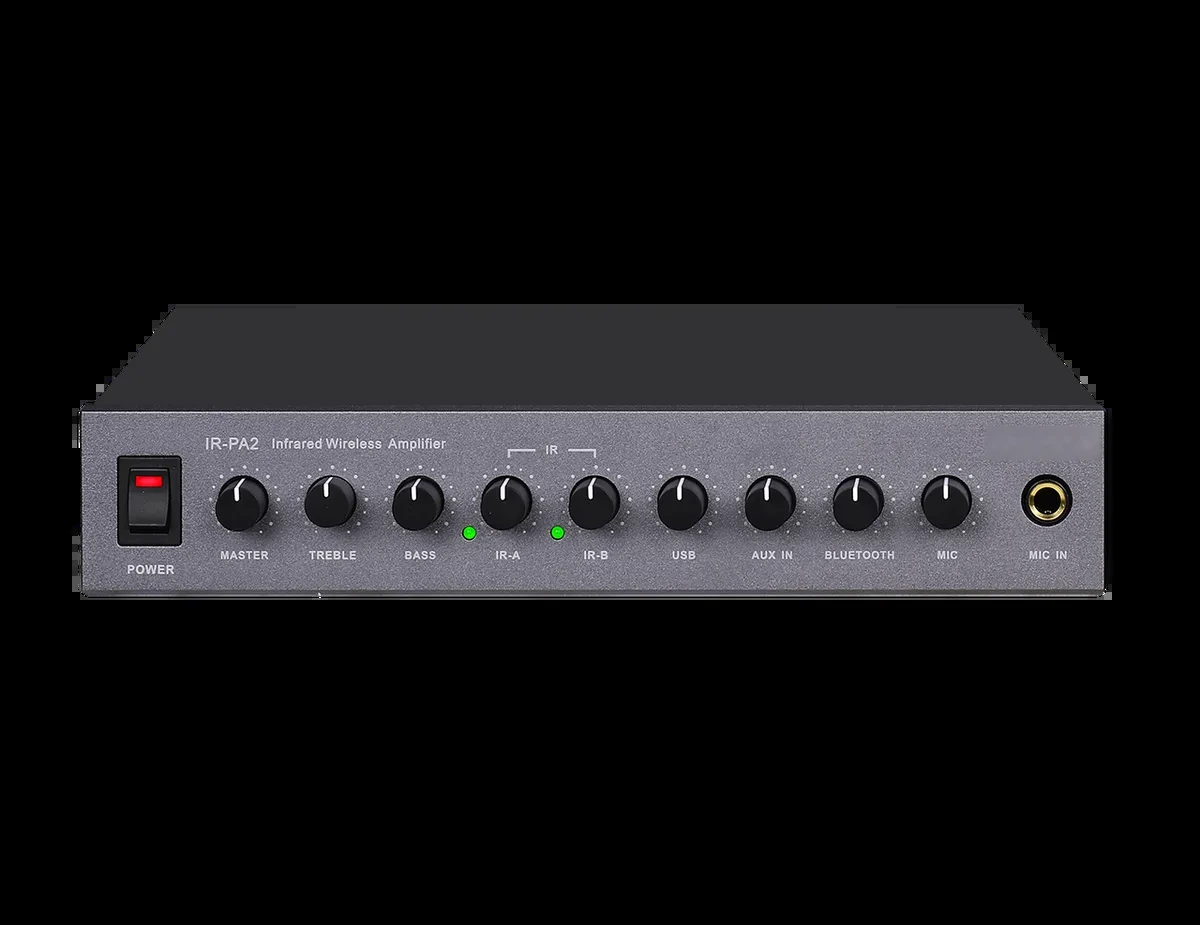
Matching output. If the existing speakers are 100 V line, the new unit needs a 100 V output. If they are low impedance, check the total load of the parallel-connected speakers and confirm the amplifier’s rated minimum impedance is not exceeded.
Adequate power per room. Classroom speech reinforcement does not need much power, but headroom matters. As a rough guide, 10–20 W per classroom is usually sufficient for speech at comfortable levels with modern high-sensitivity speakers; a large hall or a noisy workshop needs considerably more.
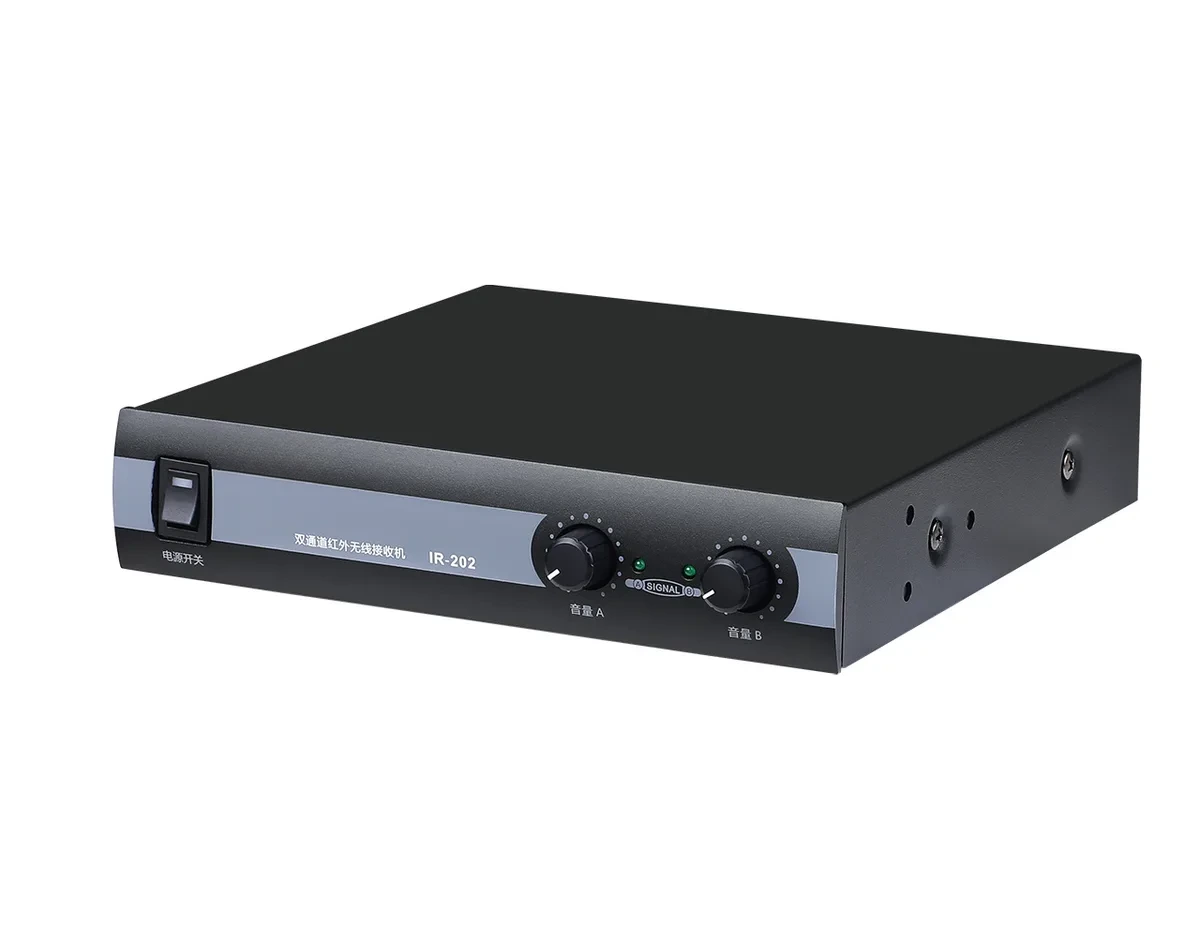
A line output if the amplifier is retained. Where the existing amplifier is in good condition and drives multiple zones, a line output from the new receiver into that amplifier is often the simplest integration.
Volume control at the room. A classroom system sharing a campus amplifier needs a local volume control, otherwise one room’s setting changes every room.
The gain-before-feedback question
Reusing existing speakers changes the acoustic layout, and the layout is what determines gain before feedback. If the old speakers are mounted behind the teaching position, close to the whiteboard, or aimed at the wall behind the teacher, the new microphone will feed back at a lower level than it would with correctly placed speakers.
In that situation there are three options: move the speakers forward of the teaching position, add a pair of speakers in the correct location and leave the old ones as a second zone, or accept a lower system volume. The third option usually defeats the purpose of the upgrade.
When to replace rather than reuse
Replace the speakers when: the cones are torn or the surrounds perished; the speakers are ceiling units in a room where the ceiling void is inaccessible for cable work anyway; the existing layout puts speakers behind the teaching position and cannot be changed; or the speakers were domestic hi-fi units never intended for speech reinforcement over long periods.
Also replace when the speaker count is far below what the room needs. Two ceiling speakers in a 90 m² room will not give even coverage no matter how good the amplifier is.
A survey checklist
- Photograph the speaker positions relative to the teaching wall.
- Count the speakers and note the impedance or line voltage marked on each.
- Note the model of the existing amplifier and whether it still powers up cleanly.
- Measure the room and note ceiling height and surface materials.
- Confirm whether the existing cable can be reused or new cable is required.
- Test the circuit with a known source before removal, so a fault is identified early.
Planning the work
Retrofit projects usually fail on access, not on audio. Ceiling voids, conduits and the school’s holiday calendar determine the schedule far more than the equipment does. Survey two or three representative rooms fully before pricing the rest, and allow for one room type that turns out to be different.
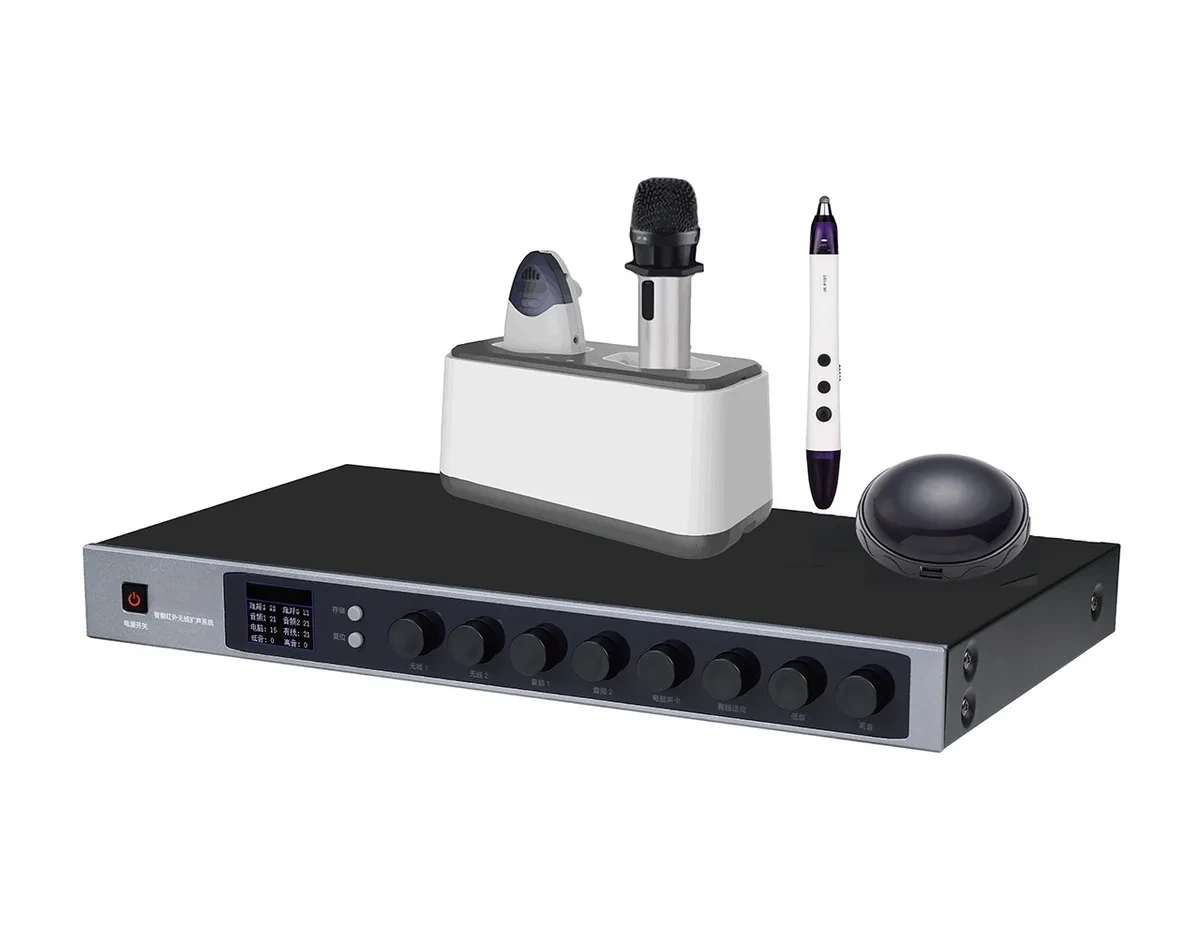
Seekika Audio supplies classroom systems with both low-impedance and 100 V outputs, and can review photographs of your existing installation to advise on reuse. Send us the speaker details and room photographs and we will tell you what the new system needs to drive.
FAQ
Can I connect a 100 V line speaker to a low-impedance amplifier?
No. A 100 V line speaker has a transformer that expects a high-voltage drive; connecting it to a low-impedance output will produce very low volume at best and can damage the amplifier. Use a system with a 100 V output, or replace the speaker transformers.
How much amplifier power does a classroom need?
For speech reinforcement in a standard classroom, 10–20 W per room is usually enough with modern high-sensitivity speakers. Large halls, workshops and gymnasiums need substantially more, and headroom matters more than the continuous rating.
Can the old ceiling speakers stay if we add a new microphone system?
Usually yes, provided the new unit can drive the existing load and the speakers are positioned forward of the teaching position. Check the impedance or line voltage first, then confirm speaker placement before committing.
Is it cheaper to reuse speakers or replace them?
Reuse is usually cheaper when the speakers are in good condition and correctly positioned. Replacement becomes the better decision when the speakers are failing, the layout causes feedback, or the room has too few speakers for even coverage.